

Inside Belgium's Lace Tradition
How a trip to Belgium got me obsessed with lace, again
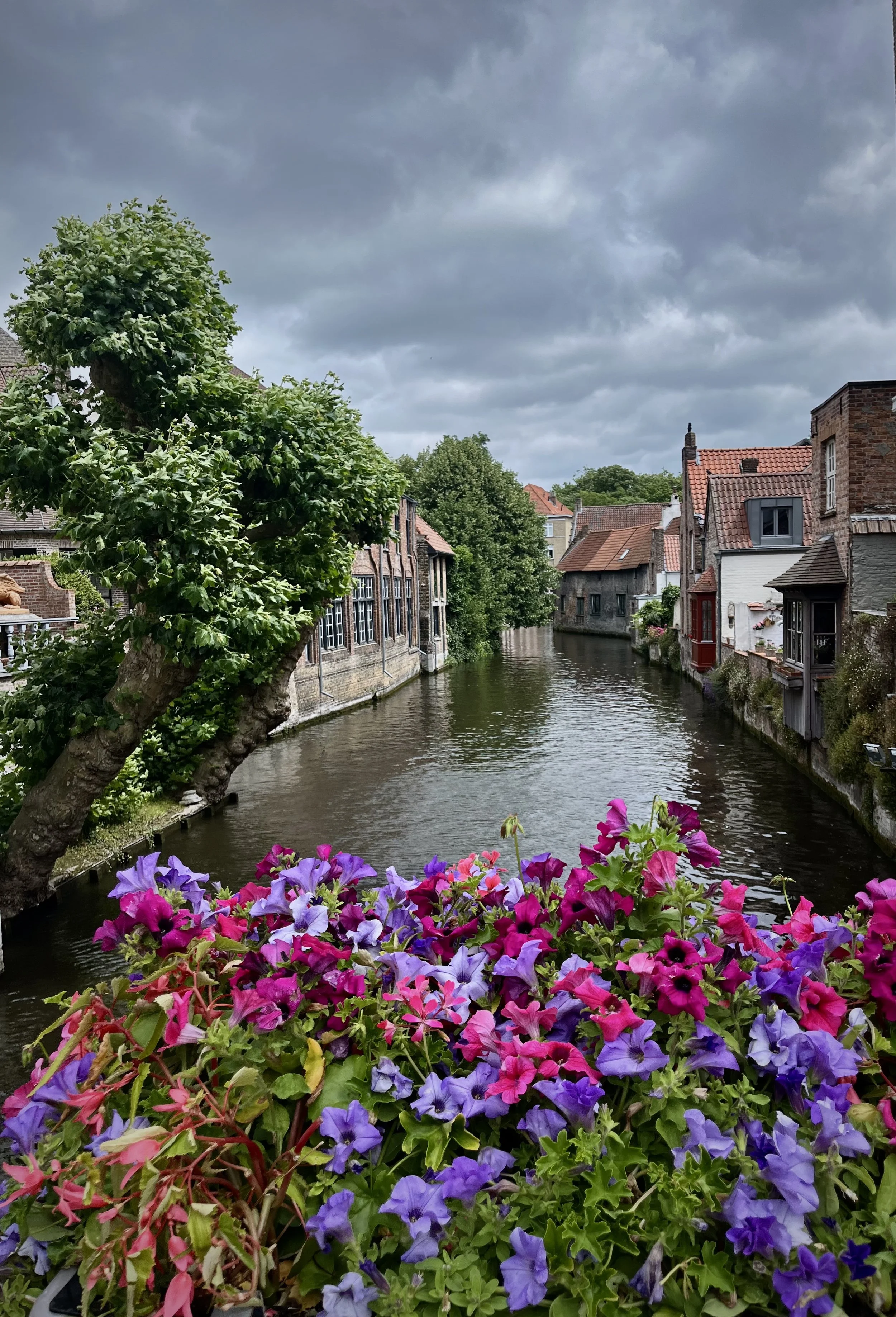
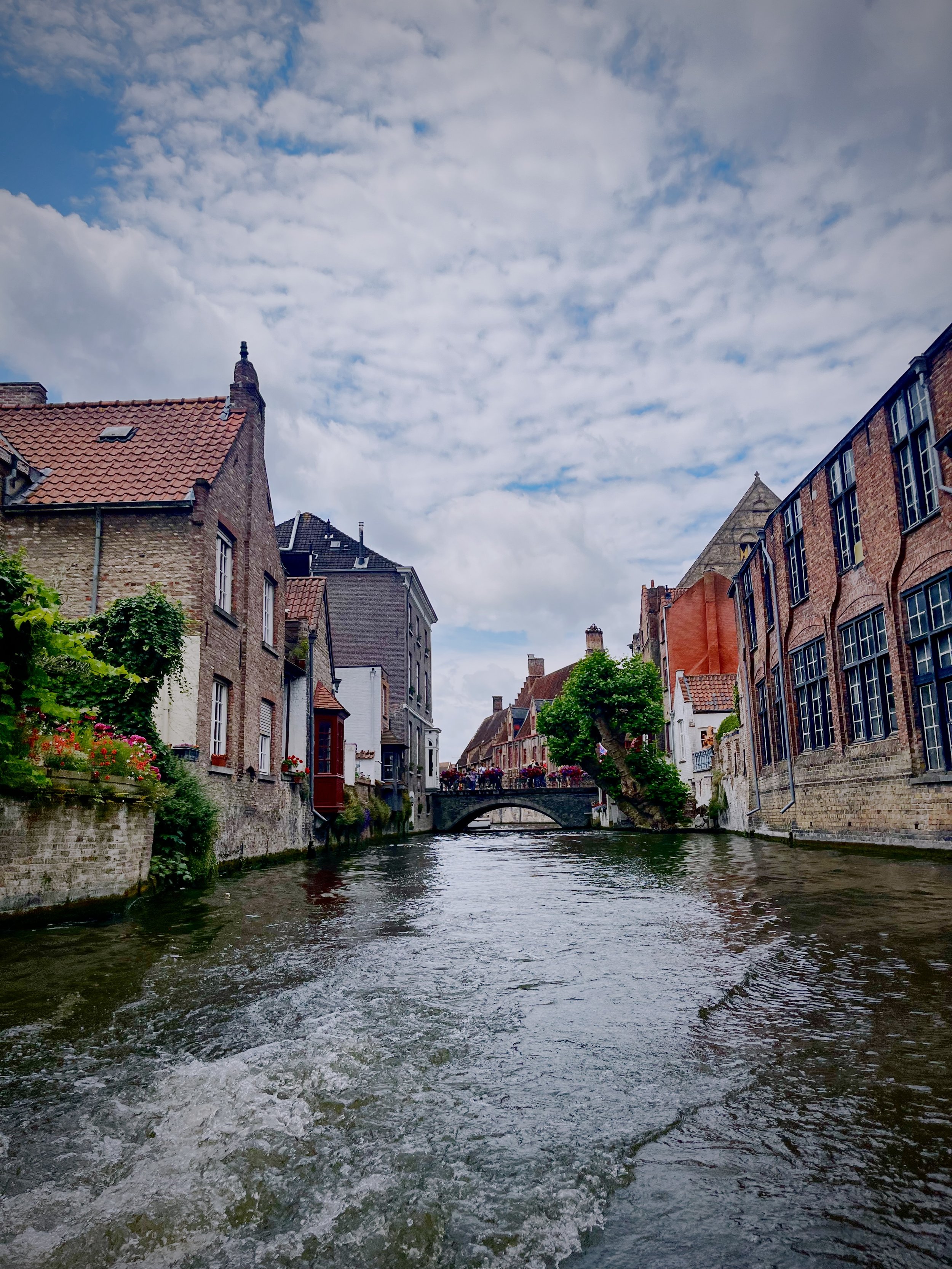

I recently spent four days in Belgium on a side trip from France, where I’m from. Brussels, Bruges! Home to the great chocolatiers, vintage shops, frites (French fries), comic books, the famous Manneken Pis, delicious gaufres (waffles), and dentelle (lace).
I’ve loved, loved lace since I was a teenager. I always adored its delicacy, and the sensual void that allows the skin to peek through. It is so elegant and so evocative.
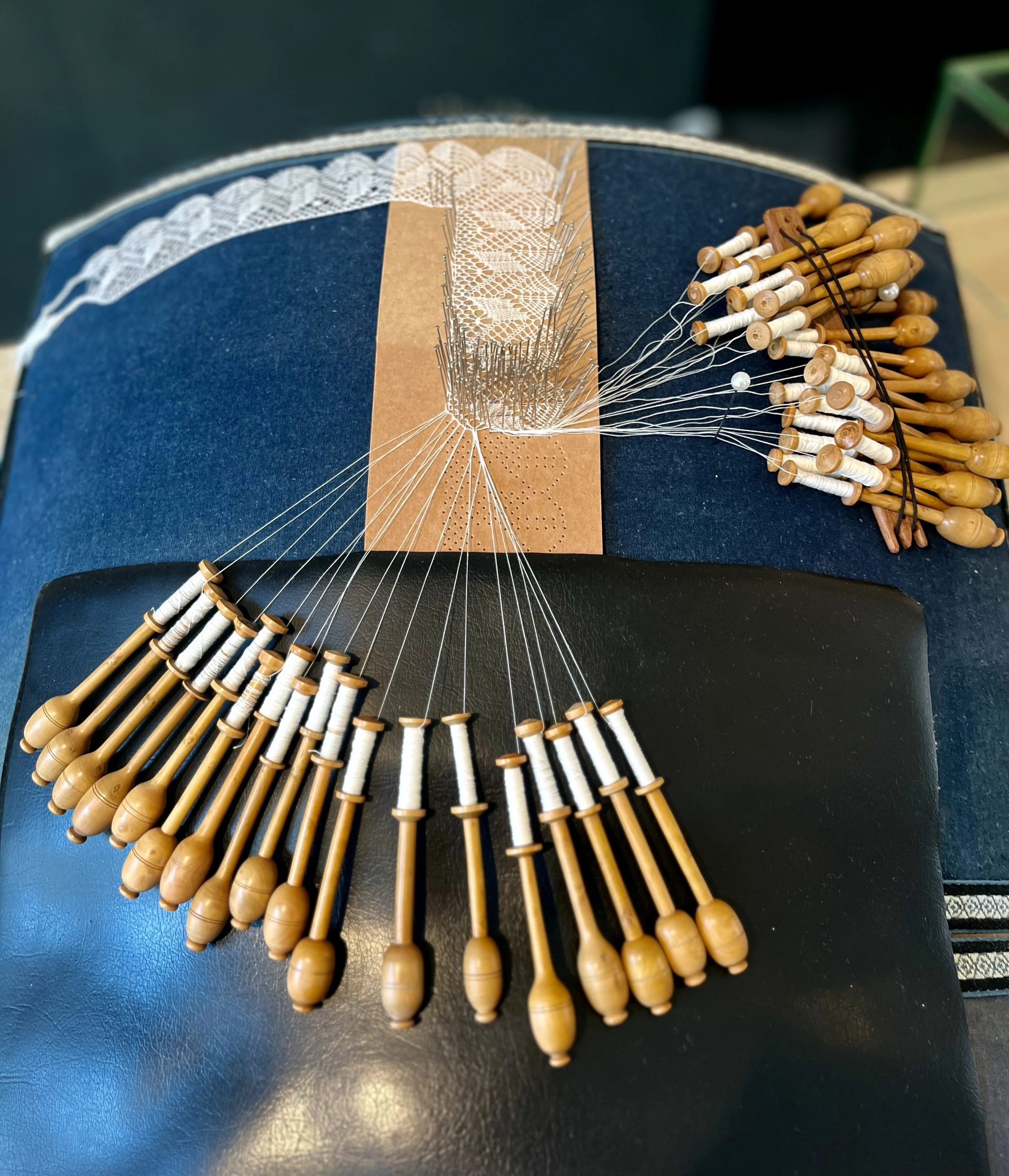
On a day trip to Bruges, I got to see more of those fine, intricate threads, and had to find out how it’s made.
A Brief History of Lace
Lace’s origins are still up for debate, but its birth is usually traced back to the late 15th century, either to the Venice, Milan area or to Flanders (a region covering what is now Belgium and parts of northern France).
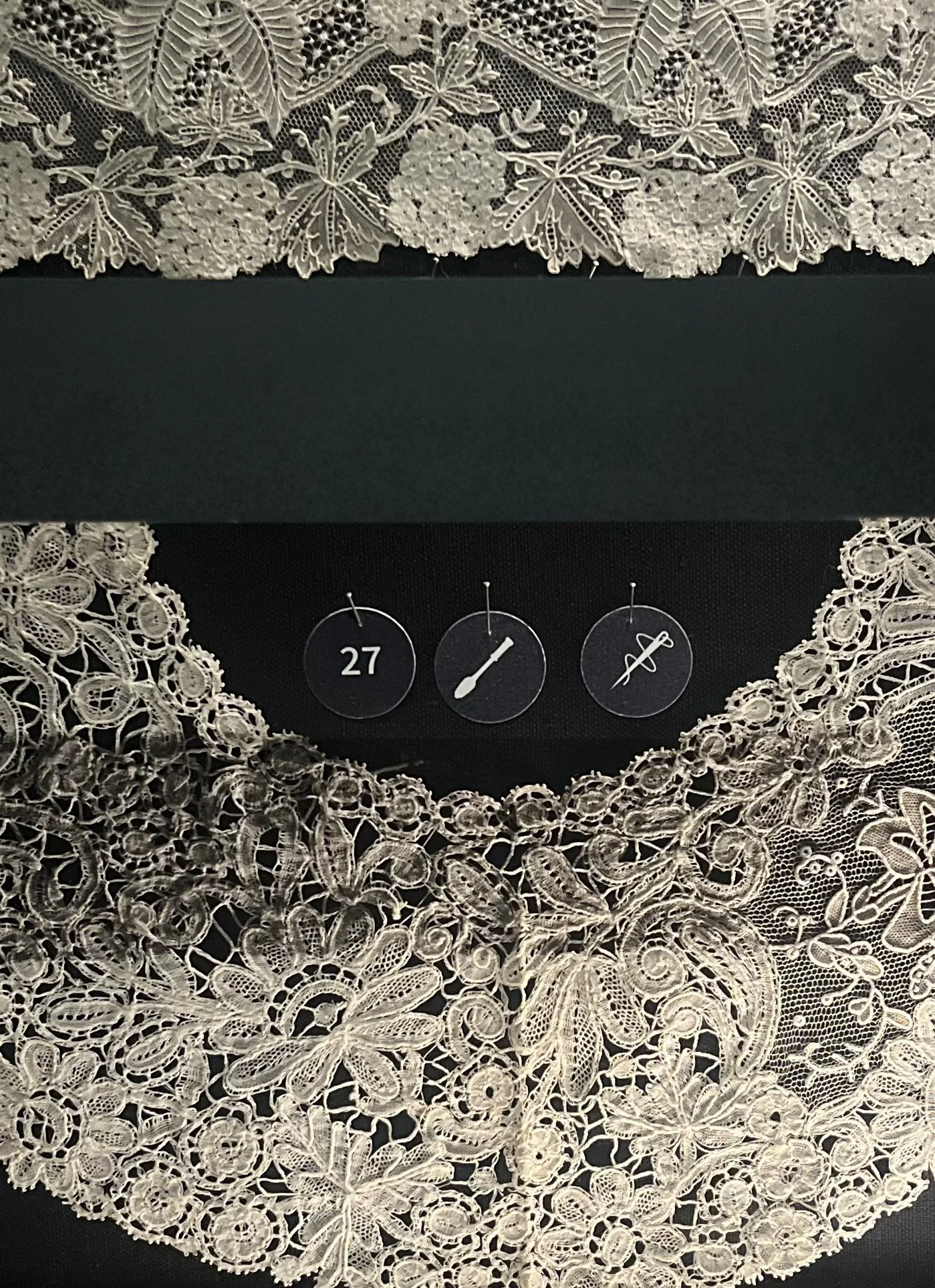
It was originally made from silk and linen, worked with needles or bobbins, and used to furnish interiors or adorn the collars of clothing. I went to the Musée Mode & Dentelle (Museum of Fashion & Lace) in Brussels and was able to appreciate the bobbin techniques and see a few samples. The complexity of the design determined the number of bobbins required; some pieces called for dozens, even hundreds.
Lace rapidly spread among the aristocracy to adorn the dresses and collars of noblewomen and noblemen. The lace âge d’or came between the 16th and 18th centuries, when lace became a status symbol for the European nobility. Each region developed its own specialty.
In France, to encourage domestic production and to compete with Flemish and Venetian lace, King Louis XIV created a royal lace Manufacture (a state-sponsored workshop) in Alençon (northwestern France), called the Manufacture Royale des Poincts de France. He even issued a royal decree forbidding the French nobility from wearing lace made in other countries, which made French lace more popular and fueled the interest. Seems like Louis XIV could have used some tariffs on foreign lace… Despite the decree, by the 1670s, smuggling thrived! People smuggled lace in coffins, on animals, even wrapped in bread. So French!
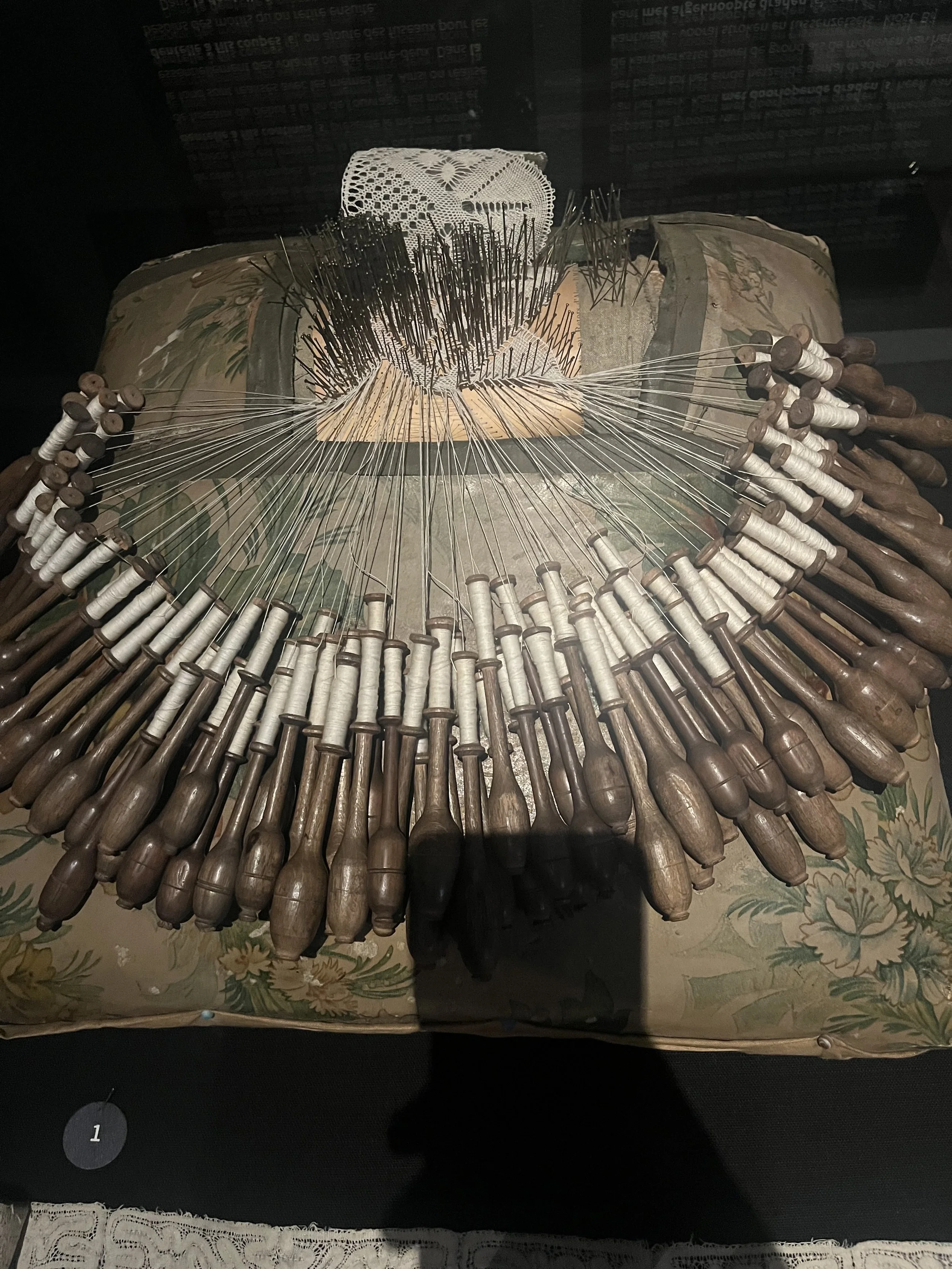
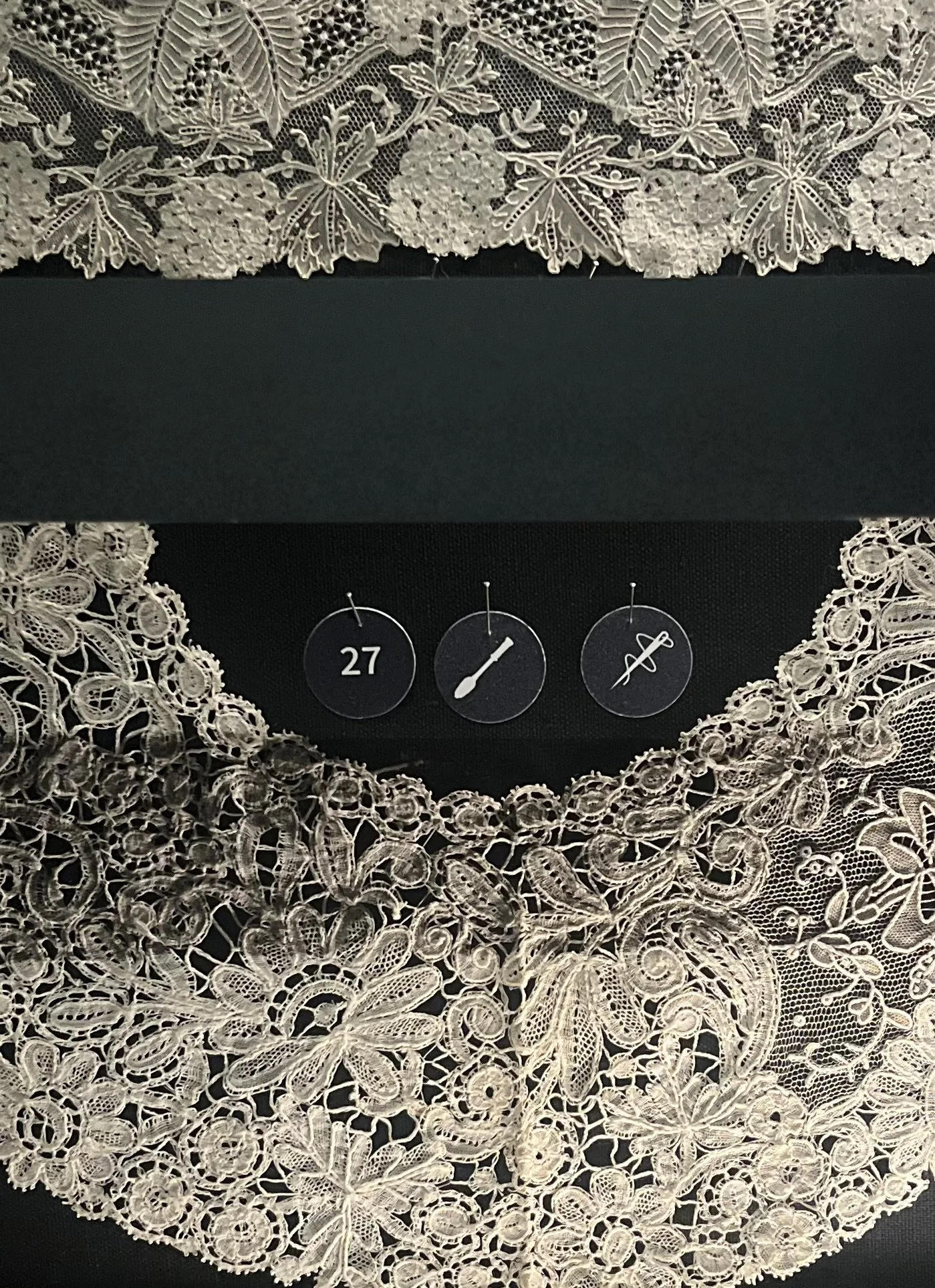
To give you an idea of lace’s significance at the time: in some towns, the entire economy revolved around it. In 1685, a cravat (collar) would cost four and a half times the annual salary of a servant. In 1765, a lace maker would need to work 15-hour days for a full year to make one meter of a Valenciennes sleeve ruffle. A pair of sleeve ruffles would require at least four meters, and more for women of higher social standing.
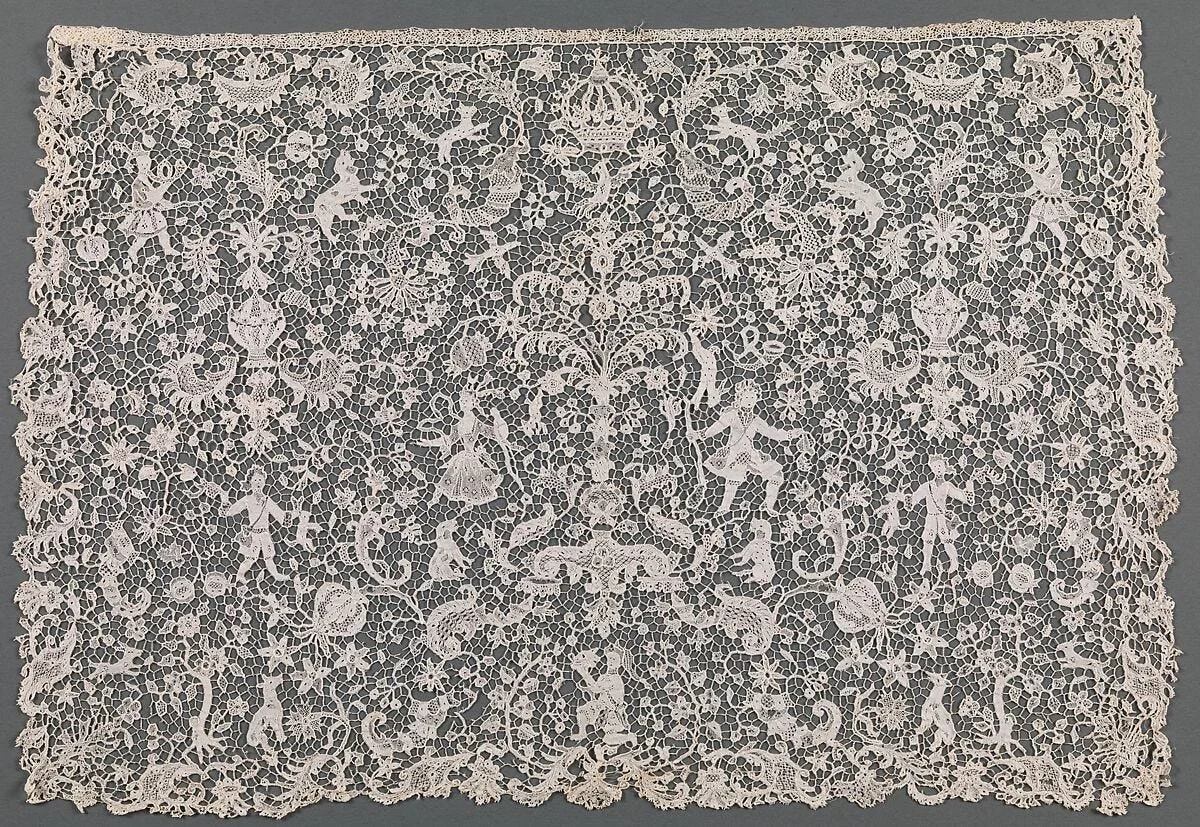
Point de France lace cravat with hunting motif, late 17th century. The Met Museum, New York.
I couldn’t help but wonder how this industry was tied to the slave trade and impacted local communities. And sure enough, like many luxuries, lace was produced by leveraging a global textile industry where exploitative labor was baked in.
Locally, in Europe, it often employed women and children in orphanages or convents who worked on labor-intensive pieces for low wages. This Cowper & Newton Museum article does a good accounting of the conditions in the lace-making industry in rural England. Workhouses for the poor and prisons also exploited lace makers, enabling these institutions to profit from their labor.
Globally, through the slave trade, the raw materials, such as cotton, became more commonly used for lace in the 19th century and were produced under inhumane conditions on plantations.
It’s important to appreciate the beauty of these pieces, but I also want to stay mindful of the fact that the production of beautiful garments is never detached from the hands that make them.
Lace in the Modern Era
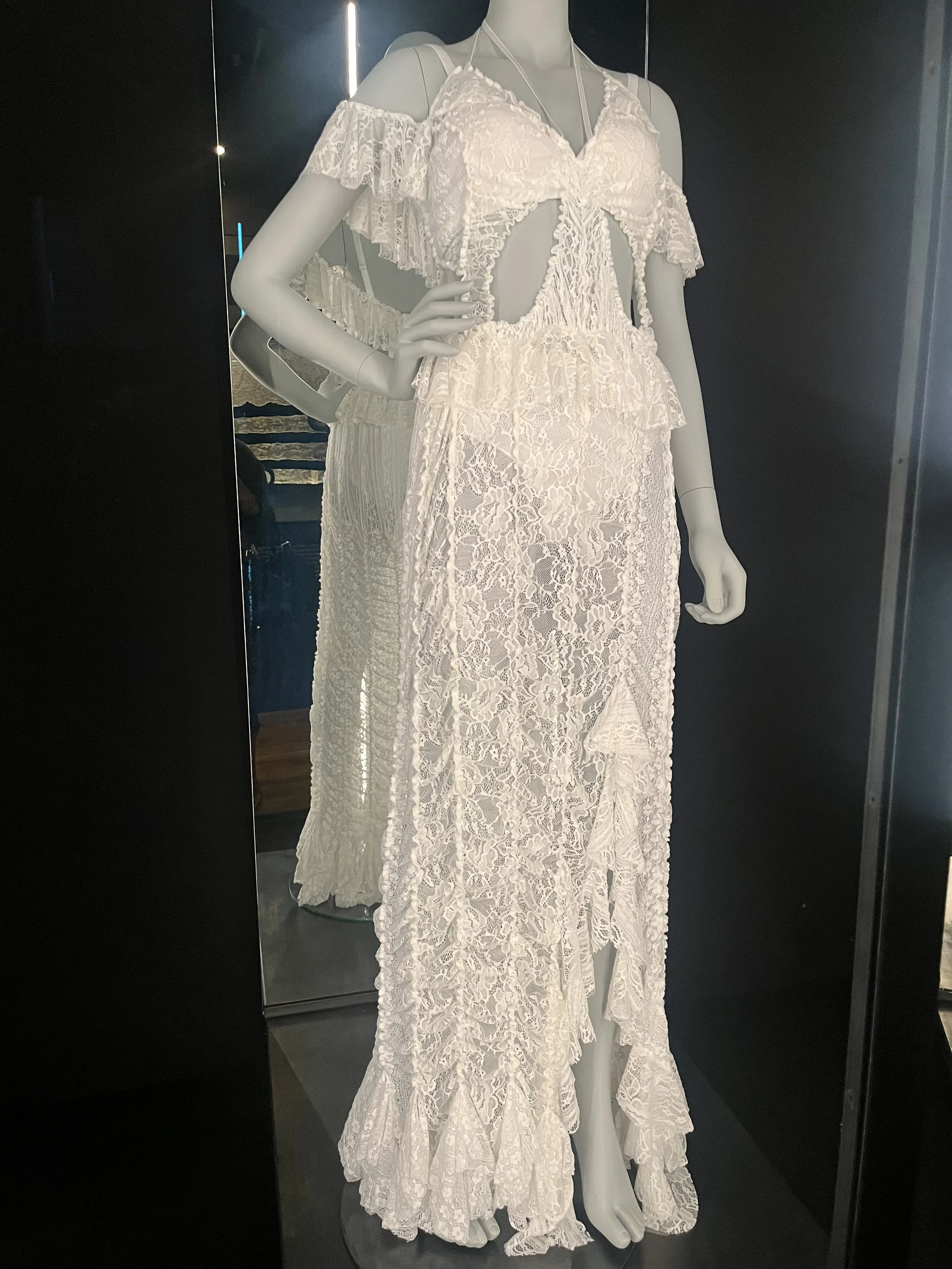
The Industrial Revolution in the 19th century democratized access to lace, with machine lace production starting in England. By the 20th century, it appeared in all sorts of garments, and designers began integrating lace into evening gowns, lingerie, bridal wear, men’s lace underwear, and so on. I took a picture of an upcycled wedding gown by Ester Manas, crafted from polyester and elastane, on display in the Chambre des dentelles (Lace Room) at the Musée Mode & Dentelle in Brussels.
Lace is not only made with silk and linen anymore; cotton, nylon, polyester, and elastane are all used to create different textures and fits. While machine-made lace is everywhere, handmade lace still holds a special place for designers, lovers of the craft, and those who appreciate its intricate delicacy.
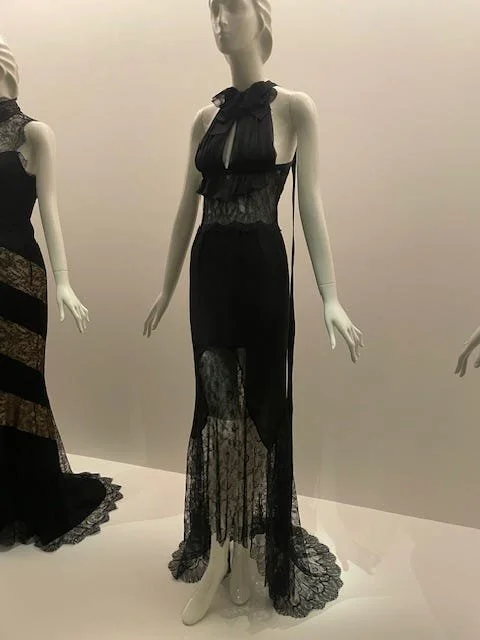
Iconic Lace Moment in… My Camera Roll
I dug through years of fashion exhibitions and found a lace look. I saw this design at the Karl Lagerfeld: A Line of Beauty exhibition at The Met in New York a couple of years ago. I believe it was for Chanel. Across the design houses he led, he consistently employed lace, tulle, crepe, and chiffon.
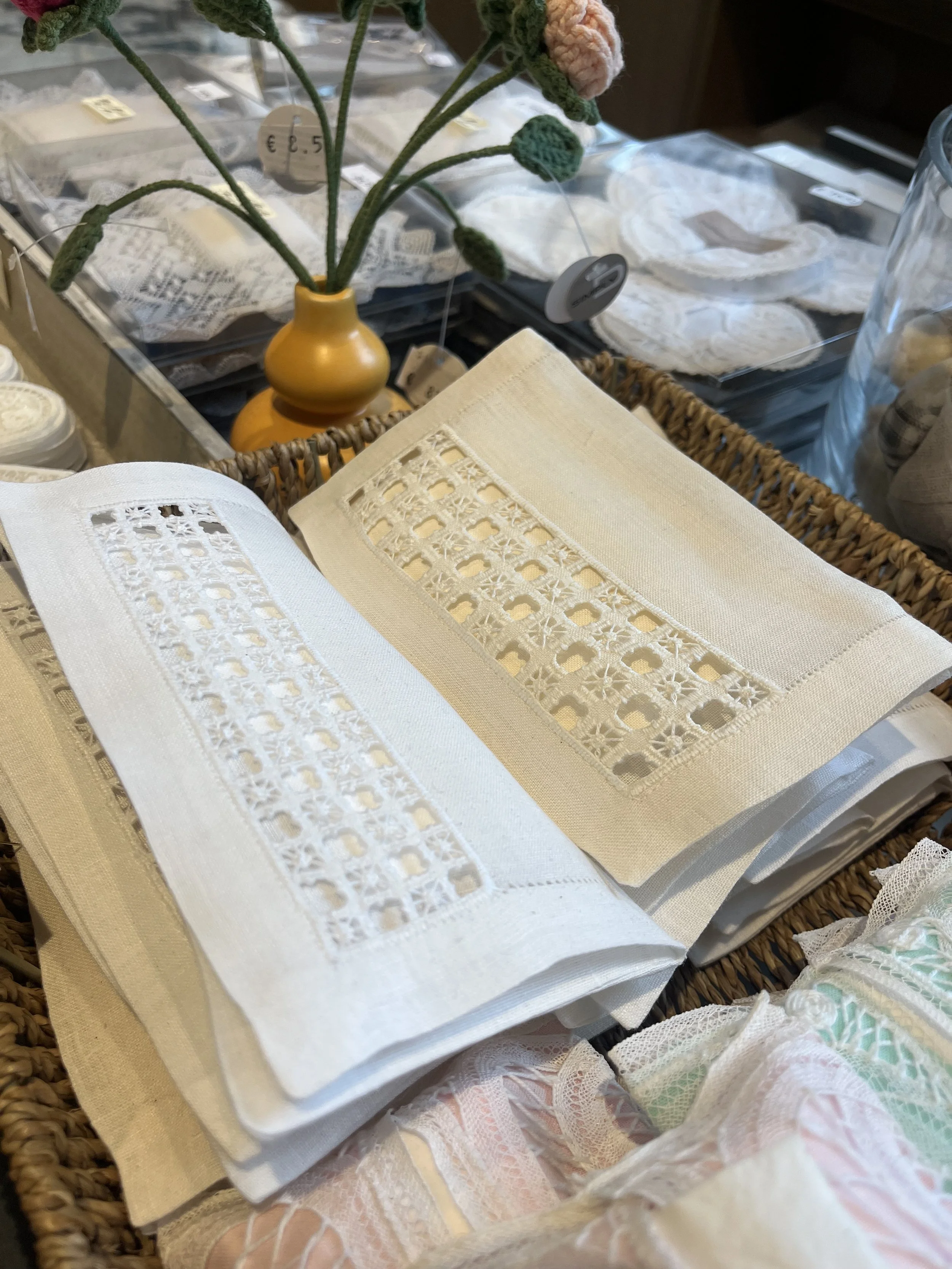
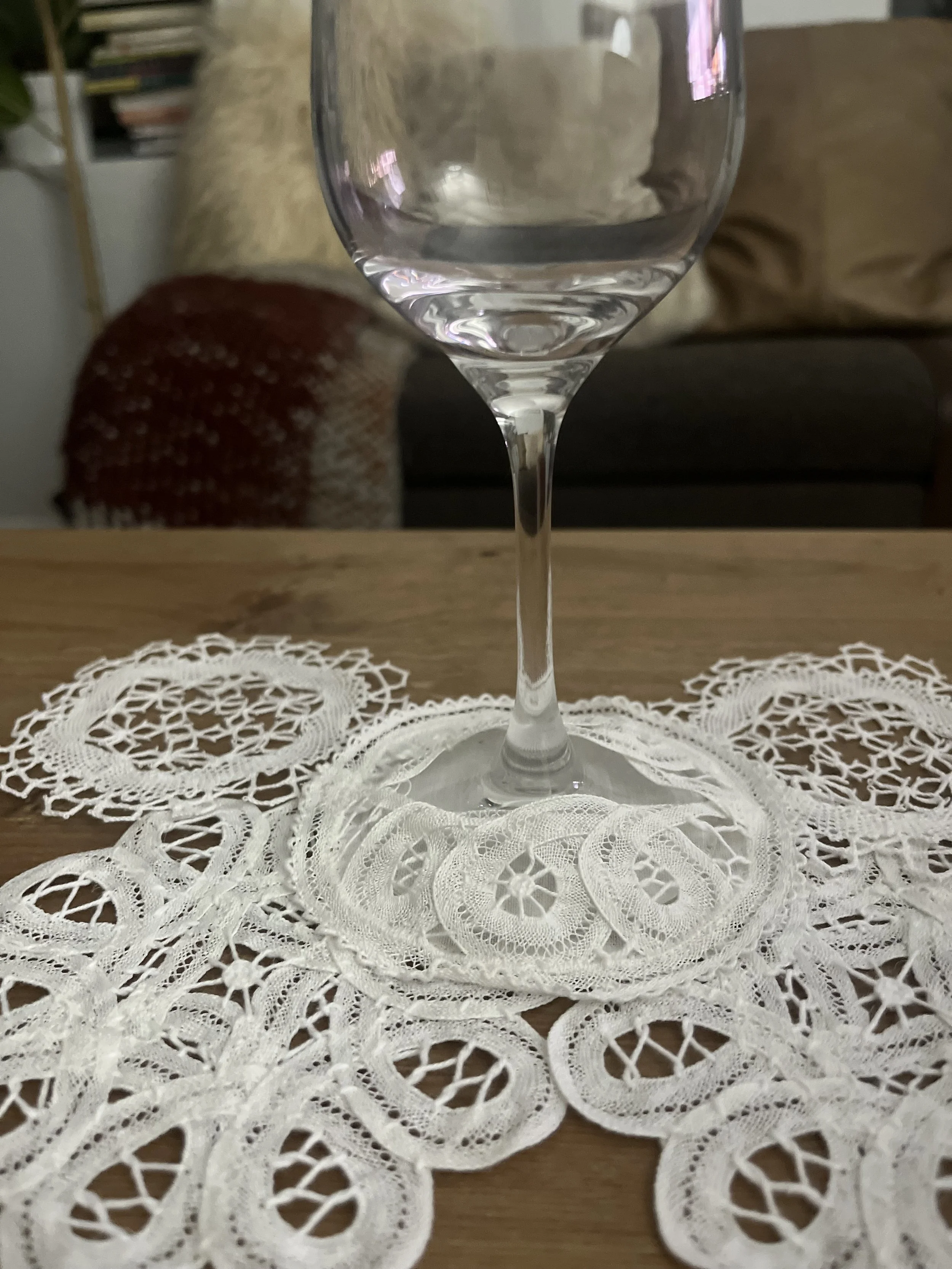
As for me, my love of lace just keeps getting more informed. The lace I own, sadly, leans more playful boudoir than haute couture designer-made. So instead, I’ll share the grandma-like coasters I bought to use when I host friends in my NYC apartment, and the equally grandma-like tissue holder I picked up in a lace shop in Bruges.
Words and photography by Eva Nean