
Venus Is Wearing Merino Wool at the US Open: You Should Train in It Too!
How Merino Wool Is Innovating in the World of Sports and Still Serving Style.
At this year’s US Open, Venus Williams stepped onto the court dressed in a custom Merino wool performance kit dress, a collaboration between @luar and @thewoolmarkcompany. Wearing wool in the heat of summer, during a high-intensity tennis match? Yes, absolutely!
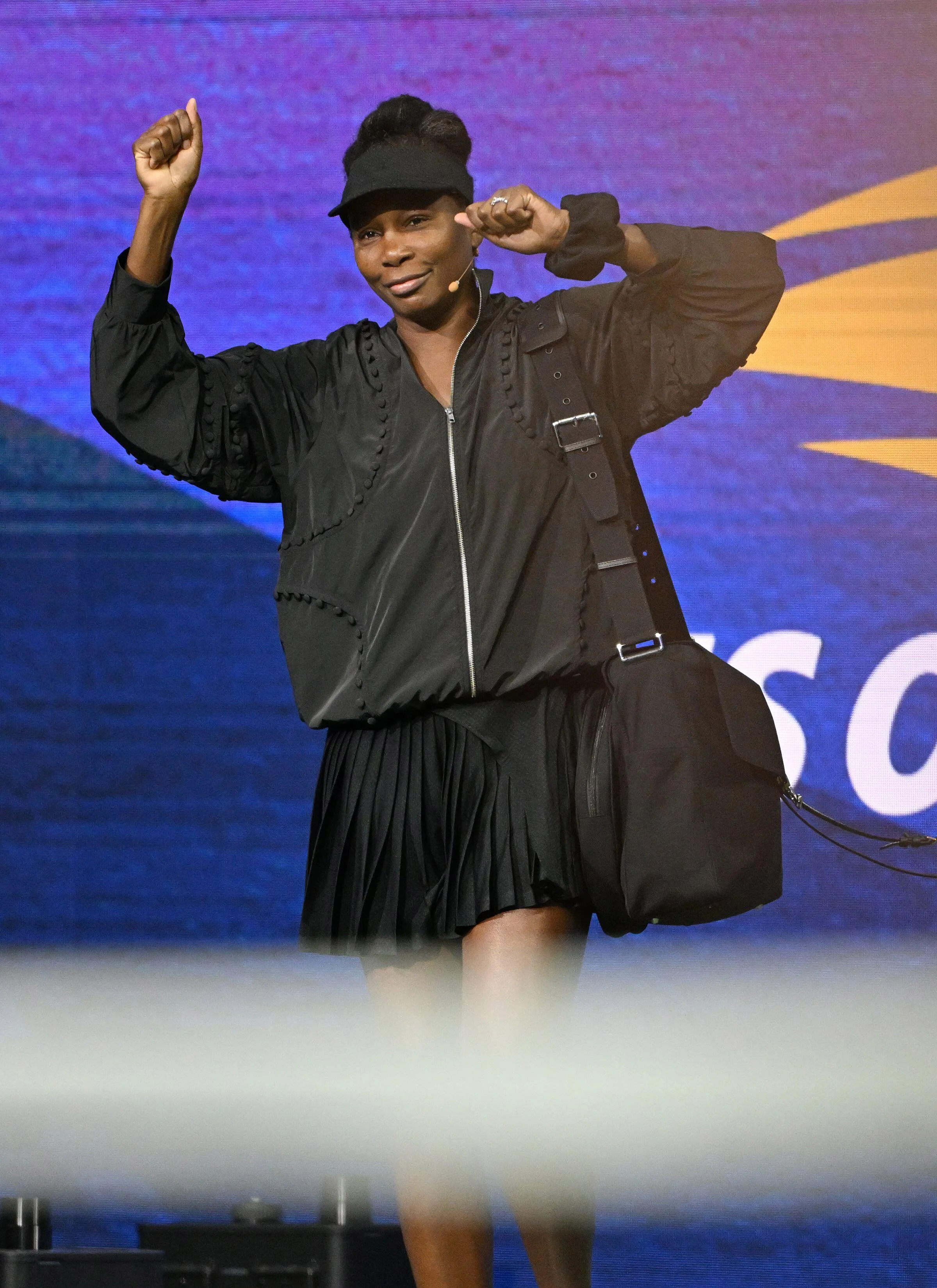
Venus Williams in LUAR x Woolmark wearing a black Merino wool mesh dress with the Unbutton Track Jacket. Photo courtesy of Woolmark × LUAR.
I’ve always loved Merino wool. When I was a student at the Sorbonne University in Paris, I would wear those oversized V-neck Merino sweaters with skinny jeans and boots. I loved the refined, light, soft yet warm feeling of this fiber. Back then, I knew nothing of its properties, that Merino wool is generally less than 22 microns (compare that to human hair at 50 to 100 microns). That really shows just how soft this fiber is.
During my V-neck merino wool skinny jeans days I also didn’t know that merino wool is a breed of sheep that started in the middle ages in Spain. Nowadays, most of it is produced in Australia and promoted globally by the Woolmark company.
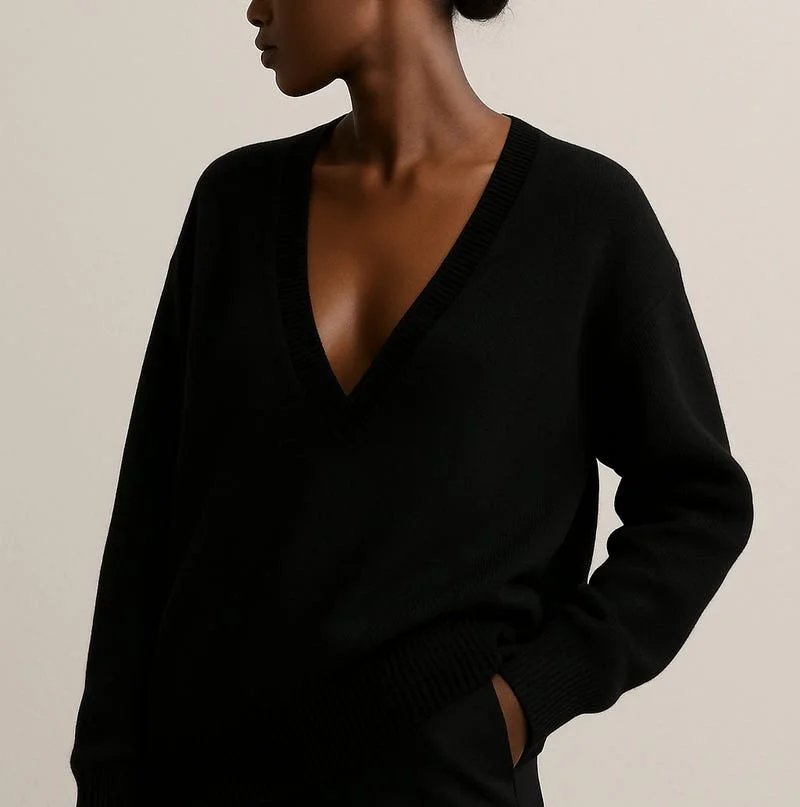
A nod to my Sorbonne days: oversized Merino wool V-neck sweater, timeless and warm.
So what does Merino wool have to do with sports and why would anyone want to sweat in Merino wool in the heat of summer? Merino wool’s appeal goes beyond softness and warmth and it has everything to do with performance:
Thermoregulator: It helps regulate body temperature. When it’s cold, the crimp (the bend in the fiber) creates gaps that trap air and insulate you. When it’s warm, it transports sweat away from the skin to keep you cool and dry. In contrast, non-natural fibers like polyester trap heat and make you sweat. Think: wool ventilates, synthetics suffocate. This makes Merino a perfect base layer for sports.
Keeps you dry and sweat-free: Our body heat causes moisture vapor to form. Merino wool fibers absorb this vapor before it turns into liquid sweat, pull this moisture away from our skin, then release it back into the air. The layer against our skin stays dry, so that we don’t feel cold and clammy.
Odor-resistant: By pulling sweat away from our skin and transforming it into water vapor back into the air, Merino prevents the damp environment in which bacteria, the main cause of body odor, can grow. Your base layer stays fresher for longer.
What about cotton? I hear you, cotton is a very popular choice for its natural properties. The issue is that itabsorbs moisture like a sponge, and keeps the fabric damp against your skin. That kills breathability. In contrast, Merino can absorb up to 30% of its weight in moisture before feeling damp. And synthetics like polyester? They trap the sweat, leading to a sticky feeling and potential odor build-up.
So, breathable, thermoregulating, odor-resistant, great for layering, biodegradable… what’s not to like?

Venus Williams with John McEnroe, wearing LUAR x Woolmark with Optim™ wool messenger bag and accessories. Photo courtesy of Woolmark × LUAR.
I’ll let you dive into the sources I used for the article below, to learn more, while I shop for the Merino running kit I plan to wear at the NYC Marathon this November. If Venus Williams and Andy Murrayare doing it, I should probably do it too, right?
Further Reading & Sources
History & Origins
Merino. Wikipedia. https://en.wikipedia.org/wiki/Merino
Performance & Properties
What is Merino Wool? Smartwool. https://www.smartwool.com/en-us/what-is-merino-wool.html
The Cotton Question: Why You Like It & Where Merino Wool Stands Up. Darn Tough. https://darntough.com/blogs/the-alternate-stitch/why-not-cotton-socks-why-merino-wool-survey
How Merino Wool Socks Keep Your Feet Dry. Nordic Socks. https://www.nordicsocks.com/blogs/magazine/how-merino-wool-socks-keep-your-feet-dry
No Sweat, No Odor: The Benefits of Merino Wool Base Layers.Varusteleka. https://www.varusteleka.com/en/articles/no-sweat-no-odor-the-benefits-of-merino-wool-base-layers/203
Merino in Sports
Merino wool and sports: a surprising but effective combination. El País. https://english.elpais.com/sports/2024-04-15/merino-wool-and-sports-a-surprising-but-effective-combination.html